

The Ancestors are Talking: Paintings by the Indigenous Seven showcases works by the Indigenous Group of Seven, whose paintings capture land, family, ceremony and resistance.

Similar to Canada’s famed Group of Seven, but not as well known, the art of the Indigenous Seven “transformed the canon of art in Canada and continues to inspire future generations,” says the Whyte Museum of the Canadian Rockies, which is hosting the exhibition through October, 2025.
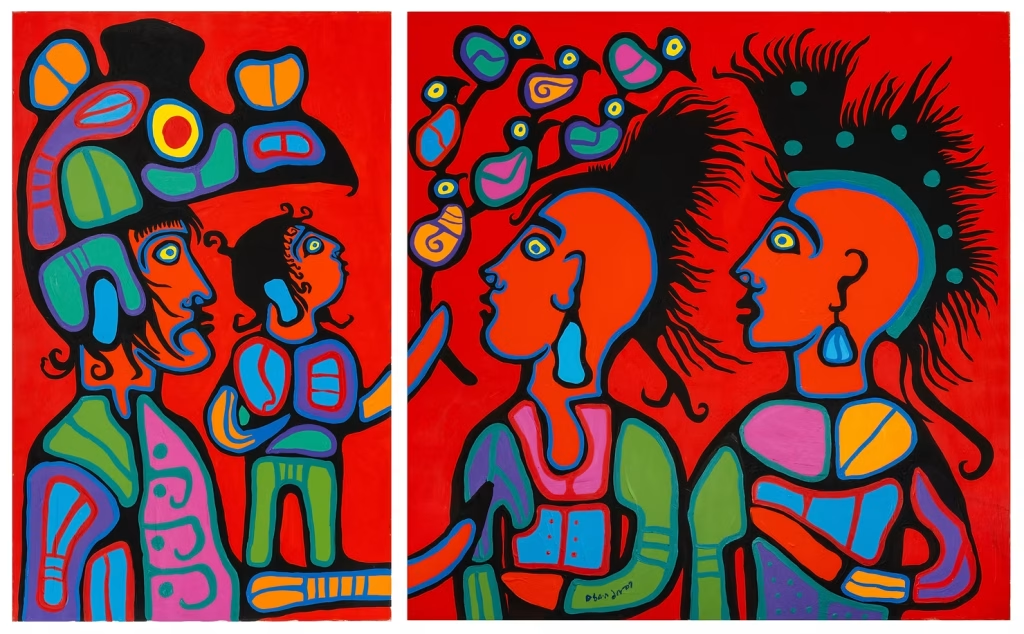
The Indigenous Group of Seven, also known as Professional Native Indian Artists Inc. (PNIAI), was a collective of seven artists formed in Winnipeg, Manitoba in the early 1970s to advocate for inclusivity, recognition, and equitable art funding for all Indigenous artists in Canada.

The group consisted of (descriptions by exhibition curators): Daphne Odjig (1919-2016), a mentor for many and master of color and story. Alex Janvier (1935-2024) whose paintings depict delicate lines and with an understanding of color and form that are otherworldly. The paintings of Norval Morisseau (1932-2007) are full of the natural world, shaman wisdom and color from the House of Invention. The spiritual interrogation of legends by Carl Ray (1943-1978), whose time was short, but who inspired a new understanding. The unique abstraction of Jackson Beardy (1944-1984), the sensitive portrayal of nature by Eddy Cobiness (1933-1996), and the surreal dreaming of Joseph Sánchez (b. 1948).

Curated by a team led by Sánchez, the group’s last surviving member, the show highlights these artists’ mastery of color, form and storytelling.
Their work blended activism, cultural identity and artistic innovation, paving the way for Indigenous artists in the mainstream art world. Through their bold use of colour, abstraction and spiritual themes, the members of this trailblazing collective broke barriers, resisted systemic exclusion and redefined Indigenous artistic expression.

The exhibition showcases paintings by the artists that have rarely been seen by the public. The exhibition also pays tribute to the pivotal contributions of PNIAI, its nurturing of kinship, and activism. As Sánchez notes, “This art is revolutionary and remains deeply relevant to the history of Canadian art. These works not only reflect the past but continue to resonate with the present and inspire future art practices.”
Indigenous Mentorship Program
The exhibition also lays the groundwork for The Whyte’s Indigenous Mentorship Program, led by Joseph Sánchez and curator Dawn Saunders Dahl. Seventeen local Indigenous artists have been invited to create new works inspired by The Ancestors Are Talking. This program honours the original intention of the Indigenous Group of Seven—to amplify the voices of Indigenous artists. Artworks created through this program will be exhibited at The Whyte in 2026.
The Whyte Museum of the Canadian Rockies, here.
Discover more from Canadian Art Junkie
Subscribe to get the latest posts sent to your email.


So creative! Lovely.
Wonderful and the video was terrific. Beautiful work and dance.
hadn’t heard of the Indiginous Group of Seven. Thanks so much for the stunning visual look!